


Hoping for (or Dreading) a Housing Crash? Here’s What the Experts Actually Forecast

Some buyers are bracing for a crash. Meanwhile, others are quietly hoping for one. In fact, a recent national survey from Clever Real Estate found that 58% of Gen Z buyers want prices to fall so owning a home feels more within reach.
So, what does the data really say? And more importantly, what does it mean for the Tampa Bay housing market?
I hear this question almost every week. It comes from relocation buyers, move-up buyers, and homeowners thinking about selling. That’s why I want to walk you through the latest expert forecast. Together, we’ll separate the headlines from the facts and look at what this means for your next move.
What the Experts Are Forecasting Nationally
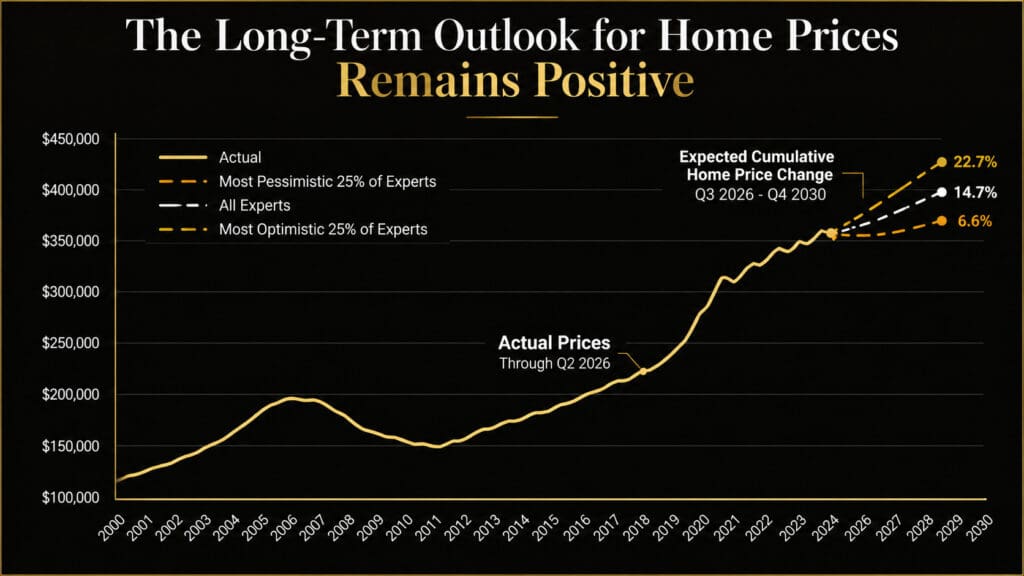
Every quarter, Fannie Mae surveys more than 100 housing experts for its Home Price Expectations Survey. Now the newest results are in, and the panel is not calling for a crash.
Instead, the panel’s average forecast shows national home prices rising every year through at least 2030. Overall, experts expect prices to grow about 14.7% over the next five years.
Of course, that’s nothing like the wild price jumps of 2021 and 2022. Rather, it points to steady, healthy growth.
Why does this matter? Because buyers waiting for prices to collapse may be waiting a long time. In other words, holding off could end up costing more, not less.
Still, keep in mind that these are national numbers. Local markets can run hotter or cooler. For that reason, it helps to pair national data with insight from someone who works in your neighborhood every day.
Even the Pessimists Expect Prices to Rise
This is the most telling part of the survey. When Fannie Mae splits its panel into optimists and pessimists, both groups still forecast growth.
The most cautious experts expect national home prices to climb roughly 6.6% by the end of 2030. That’s a modest gain, but it is still a gain. Even the forecasters most worried about the economy aren’t calling for prices to fall.
Why does this matter? Crash predictions spread quickly online, especially on social media. The professionals who study housing data for a living see a different picture.
Two factors keep the national market stable. Many markets still don’t have enough homes to meet long-term demand. And today’s homeowners generally hold significant equity, which makes widespread forced selling far less likely than it was in 2008.
The takeaway is simple: a slower market is not a crashing market.
How the Forecast Has Shifted Over the Past Year
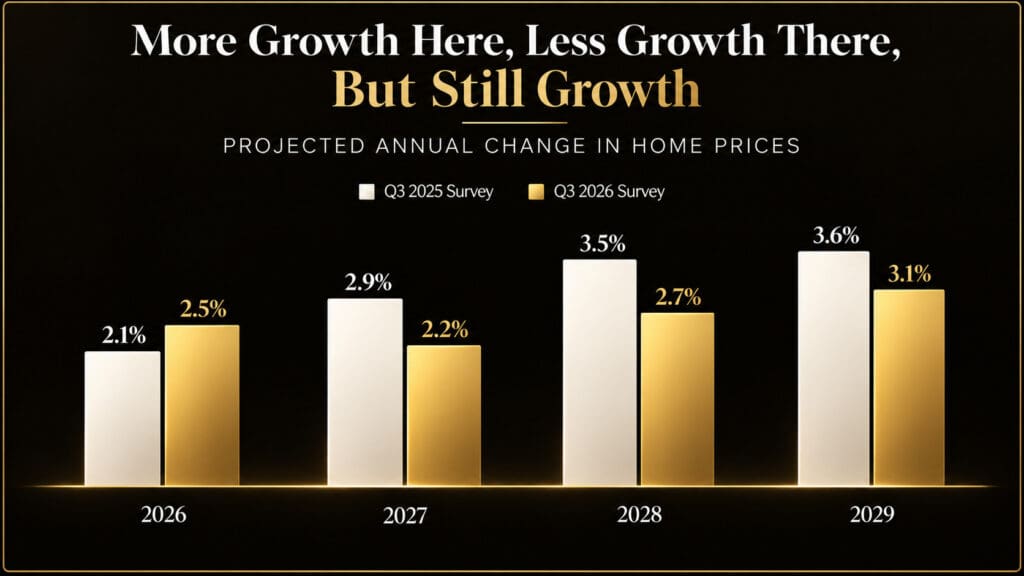
Since the survey runs four times a year, it’s easy to see how expert opinions change over time.
A year ago, the panel expected national prices to grow 2.1% this year. Now that number sits at 2.5%. In short, the near-term outlook actually improved.
On the other hand, the longer view cooled slightly. Experts now expect a bit less growth in 2027 through 2029 than they did a year ago. Most likely, that reflects affordability, mortgage rates, and general economic uncertainty.
Even so, every single year in the forecast still shows prices going up. Growth is slowing down, not turning around.
Honestly, a slower climb is a good thing. After several unpredictable years, the market is finding a more normal pace. Consequently, buyers get more breathing room, and sellers get more realistic expectations.
What This Means for the Tampa Bay Housing Market
National forecasts set the tone, but local conditions decide your outcome. Across the Tampa Bay housing market, performance varies widely by submarket, price point, and property type.
From my day-to-day work with buyers and sellers, here’s what stands out:
- New construction communities in Wesley Chapel, San Antonio, Zephyrhills, and Land O’ Lakes often come with builder incentives such as rate buydowns or closing cost credits.
- Established resale neighborhoods in Lutz and Odessa continue to draw buyers who want mature landscaping, larger lots, and no CDD fees.
- Relocation demand remains a key driver. Buyers from higher-cost states keep choosing Tampa Bay for Florida’s lack of a state income tax, the lifestyle, and the value.
Total cost of ownership matters more than ever, too. Homeowners insurance, HOA dues, CDD assessments, and flood zone status can change your monthly payment significantly. Smart buyers evaluate the full picture, not just the list price.
Ultimately, the right strategy depends on your neighborhood, your timeline, and your goals.
Buyer Tips for Today’s Market
- Stop waiting for a crash. Expert forecasts don’t support it, and prices are expected to keep rising.
- Shop incentives, not just prices. Builder rate buydowns can lower your monthly payment more than a small price cut would.
- Get fully pre-approved. A strong pre-approval gives you leverage, especially on well-priced resale homes.
- Calculate your true monthly cost. Include insurance, taxes, HOA dues, and any CDD assessment before you fall in love with a home.
- Verify school zones and flood zones directly. Boundaries and designations change, so confirm them with the school district and FEMA flood maps.
- Hire buyer representation for new construction. The builder’s sales agent represents the builder. Your agent represents you. Buyer-broker compensation terms are now set in a written agreement before touring, so ask how compensation works and whether the builder offers to contribute.
Seller Tips for Today’s Market
- Price for today’s market, not 2022’s. Moderate growth rewards realistic pricing.
- Know your competition. In many areas, your toughest competitor is a builder offering incentives down the road.
- Prepare the home thoroughly. Fresh paint, landscaping, and pre-listing inspections help your home stand out.
- Market beyond the MLS. Relocation buyers often find homes through video tours and online communities before they ever visit.
- Plan your next move first. If you’re buying and selling at the same time, coordinate both transactions early so you don’t end up carrying two mortgages.
The Equity Math: What Rising Prices Could Mean for You
Percentages are useful, but dollars are what drive decisions. So let’s do the math.
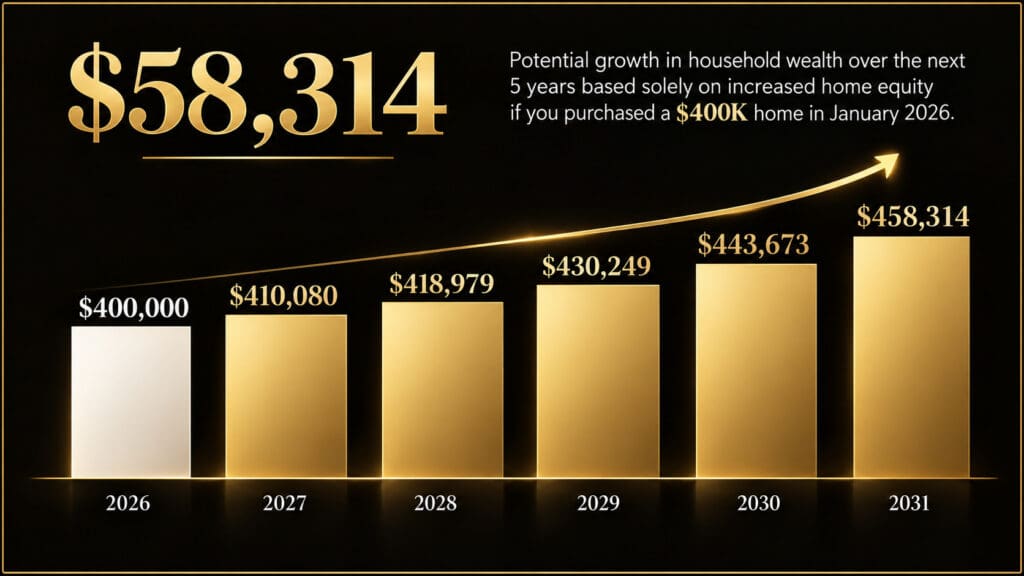
Based on the panel’s average national forecast of 14.7% cumulative growth, here’s how equity from price appreciation alone could add up over five years:
| Purchase Price | Potential 5-Year Equity Gain* |
|---|---|
| $400,000 | ≈ $58,800 |
| $500,000 | ≈ $73,500 |
| $700,000 | ≈ $102,900 |
Illustrative only, based on national forecast averages. Actual local appreciation will vary.
That’s real wealth building on top of the principal you pay down each month. Meanwhile, buyers waiting for a crash the experts don’t expect could end up paying more for the same home later.
For relocation buyers moving from higher-cost markets, the opportunity is twofold: more home for the money today, and the potential for long-term appreciation tomorrow.
Investment Perspective and Future Outlook
For investors, a steady-growth market is often more attractive than a volatile one. Predictable appreciation makes long-term planning easier and lowers speculative risk.
Tampa Bay’s fundamentals remain solid. Population growth, business relocations, and a strong appeal to remote workers continue to support housing demand. Meanwhile, ongoing development in Pasco and Hillsborough Counties gives investors a mix of new construction and resale options.
Looking ahead, expect a more balanced market. Buyers will likely keep gaining negotiating power on some properties, while well-priced homes in high-demand areas will still move quickly.
Investors should focus on location, rental demand, insurance costs, and HOA rental restrictions before buying. A data-driven, neighborhood-specific strategy will matter far more than national headlines.
Bottom Line
Whether you’re dreading a crash or hoping for one, the expert verdict is the same: home prices are expected to keep rising, just at a calmer pace.
For buyers, that means waiting may not pay off. For sellers, it means pricing smart and marketing strategically still wins. For everyone, it means local insight matters more than national noise.
If you’re wondering what this forecast means for your home, your neighborhood, or your timeline, let’s talk. I’d love to help you build a clear, confident plan for your next move in Tampa Bay.
Explore More Homes in Tampa Bay


Elena Esquen, MBA
Realtor® & Broker Associate
New Construction Specialist & Relocation Expert
Coldwell Banker Realty
📱 Phone: 813-822-4261
✉️ Email: Homes@EsquenTampaBay.com
🌐 Website: EsquenTampaBay.com
🏠 Resources: TampaHomesToday.com
🌴 Serving the Greater Tampa Bay Area
Frequently Asked Questions
1. Is the Tampa Bay housing market going to crash?
Current expert forecasts don’t point to a crash. Fannie Mae’s national panel expects prices to rise every year through 2030. Local conditions vary by submarket, so neighborhood-level guidance matters.
2. How much are home prices expected to rise over the next five years?
Fannie Mae’s expert panel forecasts about 14.7% cumulative national growth over five years. Even its most pessimistic experts expect roughly 6.6% growth by the end of 2030.
3. Should I wait for prices to drop before buying in Tampa Bay?
Waiting may cost more if prices keep rising as forecast. A better approach is to compare incentives, rates, and total monthly costs with a local Realtor.
4. Are new construction homes a good value in Tampa Bay right now?
Many builders in Wesley Chapel, San Antonio, and Zephyrhills offer incentives such as rate buydowns or closing cost help. These can make new construction very competitive with resale.
5. What should sellers in Tampa Bay know about today’s market?
Realistic pricing, strong presentation, and marketing beyond the MLS are essential. Sellers also need to understand how builder incentives nearby affect buyer expectations.
6. What costs should I consider beyond the purchase price?
Plan for homeowners insurance, property taxes, HOA dues, CDD assessments, and flood insurance if applicable. Verify school zones and flood zone status directly with official sources.
7. How much equity could I build buying a home today?
Based on the national forecast average, a $400,000 home could gain about $58,800 in value over five years. Actual local results will vary.
Disclaimer
This article is intended for informational purposes only and should not be considered financial, legal, tax, or real estate advice. Forecast figures referenced are national data from Fannie Mae’s Home Price Expectations Survey and Clever Real Estate and do not represent Tampa Bay–specific statistics. Equity examples are illustrative only. Market conditions can change at any time. Buyers should independently verify school zones, flood zones, HOA/CDD fees, and insurance costs. For personalized guidance regarding your real estate goals in Tampa Bay, Wesley Chapel, Lutz, Odessa, San Antonio, or surrounding Florida communities, contact me directly.