


More Homes for Sale? Why Rising Mortgage Rates May Be Good News for Tampa Bay Buyers

If it’s felt like your options have been slim lately, you’re not imagining it. Housing inventory growth has slowed noticeably over the past year, and that can be discouraging when you’re hoping to find the right home.
But there’s a shift worth paying attention to. National data suggests the slowdown may be leveling off — and an unexpected factor, mortgage rates, could be part of what nudges inventory back up in the months ahead. Here’s what’s happening, and what it could mean for your search here in Tampa Bay.
Growth Has Slowed, But It Hasn’t Stopped
Nationally, active listings were up just 2.1% year-over-year this past July, according to Realtor.com. Compare that to January, when inventory was up 10%, or May 2025, when it was up 31.5%. Growth has clearly cooled.
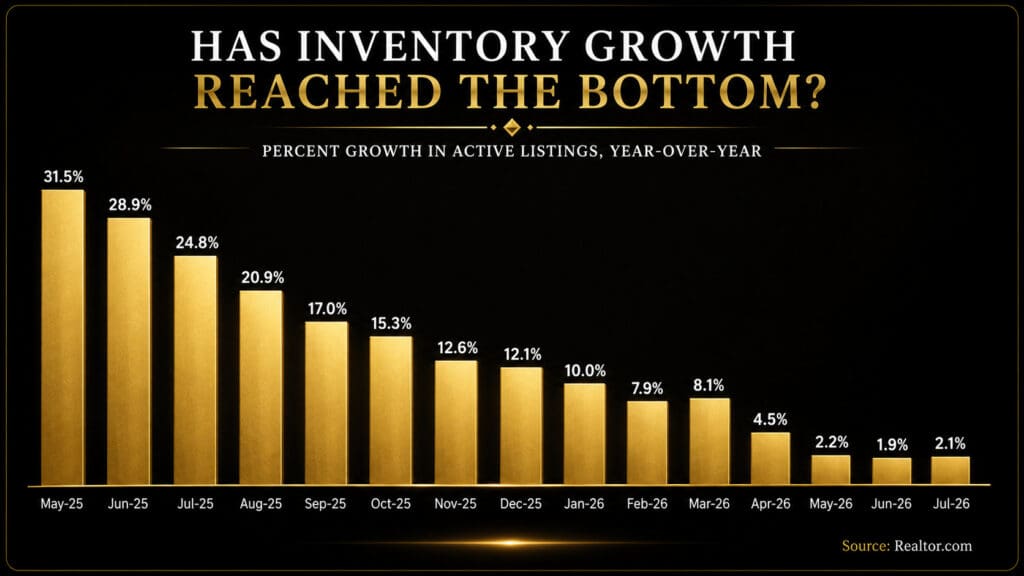
But here’s the encouraging part: the past three months have landed in a similar range, which suggests this slowdown may be nearing its floor rather than continuing to decline. Every one of those months still represents growth — not a shrinking pool of homes.
So if you’ve been holding off because it feels like there’s nothing out there, don’t count yourself out. The national trend shows more homes coming to market, and things have grown more stable in recent months, which is typically a good sign for buyers looking for a wider selection.
Locally here in Tampa Bay, submarkets like Wesley Chapel, Lutz, and Land O’ Lakes tend to see steady new listing activity as new construction communities continue to release inventory, which can help offset some of the national slowdown buyers are hearing about.
The Most Homes for Sale Nationally Since 2019
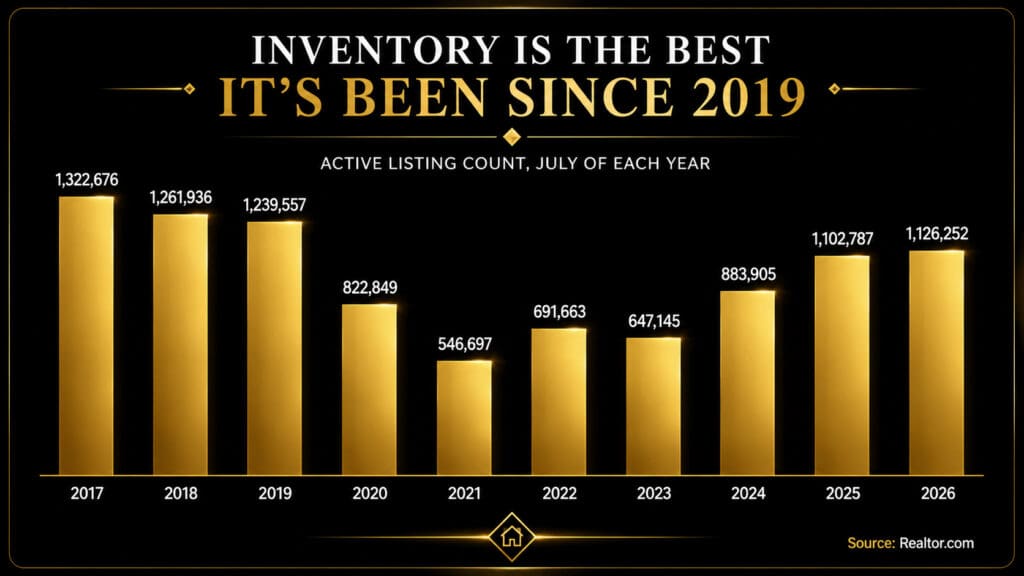
Compared to the historic lows of 2021, national inventory has climbed substantially — up year-over-year for 33 consecutive months, and nearly doubling in just a few years. This past July was the strongest July for national housing inventory since 2019.
Nationally, the market still needs roughly 150,000 more listings to fully return to pre-pandemic levels, but it’s closing in on that mark. Some experts believe the country could reach 2019-level inventory by the end of this year, even accounting for the recent slowdown.
One factor behind that trajectory may surprise you: mortgage rates.
Why Higher Rates May Actually Help Inventory Grow
It sounds counterintuitive, but there’s a real relationship between mortgage rates and how many homes come to market. As Mike Simonsen, Chief Economist at Compass, has explained, when rates rise, inventory tends to rise with them — and when rates fall, inventory tends to shrink, largely because homeowners locked into low rates become reluctant to sell and give those rates up.
Rates are expected to hold in the mid-to-upper 6% range for a while longer nationally, and Realtor.com’s latest forecast projects inventory to end 2026 up 3.6% year-over-year nationally. That points to two things: inventory growth likely picking up modestly through the rest of the year, and supply potentially closing 2026 at a historically normal level, similar to where it stood at the end of 2019.
For buyers, more homes on the market generally means more choices, more negotiating leverage, and less pressure to rush a decision — even if today’s rates aren’t the ones you were hoping for.
What This Could Mean for Tampa Bay Buyers and Sellers
While the data above reflects national trends, it’s still useful context for anyone watching the Tampa Bay market. If national inventory continues to normalize, buyers here in Wesley Chapel, Lutz, Odessa, San Antonio, Land O’ Lakes, and New Tampa may find a bit more breathing room to compare homes, negotiate terms, and avoid feeling rushed into an offer.
For sellers, a gradually growing pool of inventory is a good reminder that presentation, pricing, and marketing matter more than ever — homes that stand out will still move quickly, even as buyers have more to choose from.
Every submarket in Tampa Bay moves a little differently depending on price point, new construction activity, and buyer demand, which is exactly why local guidance matters alongside the national headlines.
Explore Homes in Tampa Bay


More Homes Are Hitting the Market — See What’s New Near You
As inventory continues to stabilize and grow, now is a great time to explore fresh listings across Tampa Bay’s most sought-after communities. Whether you’re searching for new construction, a family-friendly neighborhood, or a move-up home with room to grow, here’s where to start:
•Family Communities in New Tampa
• First-Time Buyer Friendly Homes in Riverview
• Valued Priced Homes in San Antonio

Elena Esquen, MBA
Realtor® & Broker Associate
New Construction Specialist & Relocation Expert
Coldwell Banker Realty
📱 Phone: 813-822-4261
✉️ Email: Homes@EsquenTampaBay.com
🌐 Website: EsquenTampaBay.com
🏠 Resources: TampaHomesToday.com
🌴 Serving the Greater Tampa Bay Area
Frequently Asked Questions
1. Is housing inventory actually increasing in Tampa Bay right now?
Nationally, inventory has been trending upward for nearly three years, though growth has slowed recently. Tampa Bay’s submarkets each move a bit differently, so it’s worth checking current local inventory in the specific area you’re considering.
2. Why would higher mortgage rates lead to more homes for sale?
When rates rise, homeowners who locked in lower rates become more hesitant to sell and lose that rate, which can seem like it would shrink inventory. But historically, as rates stay elevated over time, more sellers eventually move forward with life changes anyway, gradually adding supply back to the market.
3. Does more inventory mean home prices will drop?
Not necessarily. More inventory generally means more choices and negotiating room for buyers, but pricing also depends on local demand, interest rates, and how quickly homes are selling in a given area.
4. What areas in Tampa Bay have the most new listings right now?
Growing communities like Wesley Chapel, Land O’ Lakes, and parts of New Tampa tend to see steady new listing activity due to ongoing new construction. A local market snapshot can help pinpoint current activity in your target neighborhood.
5. Is now a good time to buy a home in Tampa Bay?
It depends on your personal timeline, budget, and goals. More inventory can mean more opportunity, but the “right time” is different for every buyer. A conversation about your specific situation is the best way to know.
6. How does more inventory affect sellers?
As buyers have more homes to choose from, presentation, pricing strategy, and marketing become even more important for sellers who want their home to stand out and sell quickly.
7. Are new construction homes included in these inventory numbers?
National inventory reports typically include both resale and new construction listings, though the mix can vary by source and region. Tampa Bay’s new construction activity plays a meaningful role in local supply.
Disclaimer
This article is intended for informational purposes only and should not be considered financial, legal, tax, or real estate advice. Statistics referenced reflect national housing data and may not directly represent conditions in Tampa Bay or its surrounding submarkets. Market conditions can change at any time. For personalized guidance regarding your real estate goals in Tampa Bay, Wesley Chapel, Lutz, Odessa, San Antonio, or surrounding Florida communities, contact me directly. Equal Housing Opportunity.