


The Housing Market Split in Two: Which Side Is Your House On?

Ask a few people how the housing market is doing, and you’ll likely hear conflicting answers. That’s because today’s market runs on two very different tracks, split sharply by price point. Knowing which track your home falls on changes nearly everything about your sale: your asking price, your marketing approach, and how long you should expect to wait for an offer. Here’s a breakdown of what’s driving the divide and what it means if you’re planning to sell in Tampa Bay.
Home Sales Are Picking Up Speed at the Top of the Market
Rates and buyer competition are shaping this market differently depending on price point. National Association of Realtors (NAR) data shows the pattern clearly: homes priced under $250,000 saw sales dip 2–3% year over year, while homes priced above $750,000 saw sales climb by double digits.
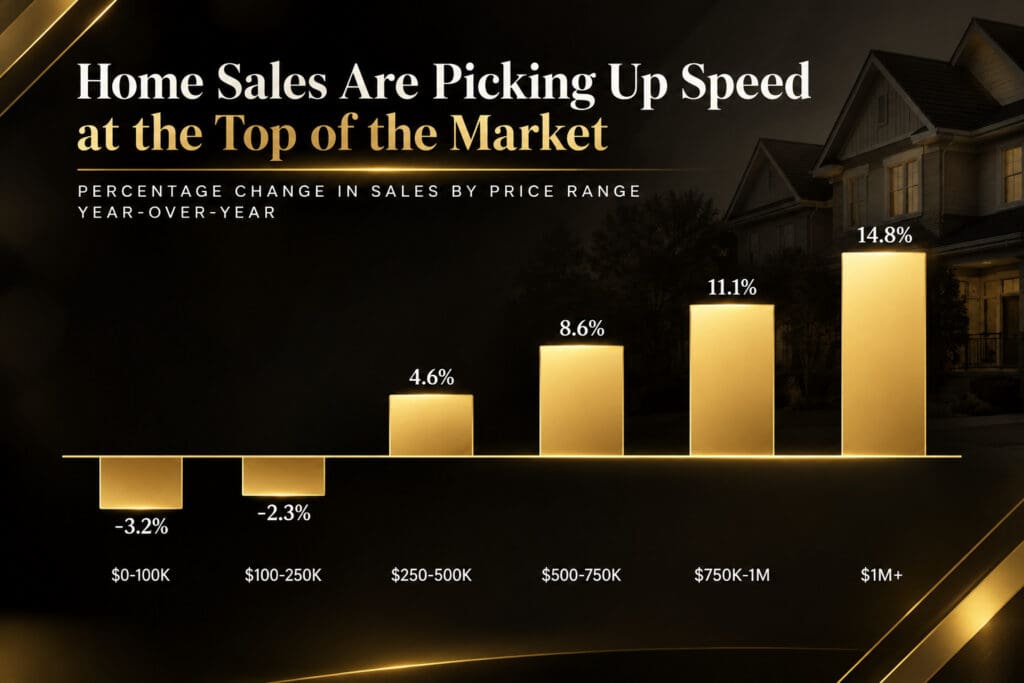
What’s driving the split? Years of price appreciation combined with today’s higher rates have made entry-level homes harder to reach, especially for first-time buyers. That’s cooled demand at the lower end.
Buyers shopping above $750,000 tend to feel rate pressure less. Many are drawing on strong equity from a current home or a healthy stock portfolio, giving them more room to move even in a higher-rate environment.
The takeaway isn’t that lower-priced homes aren’t selling. They are, just more slowly, since fewer buyers can comfortably afford that price point right now. That’s exactly why pricing strategy and presentation matter more than ever if you’re selling in that range. Price it accurately from the start, make sure the listing shows well online and in person, and work with an agent who can put it in front of every active buyer in your range.
Why Some Homes Sit While Others Get Snapped Up
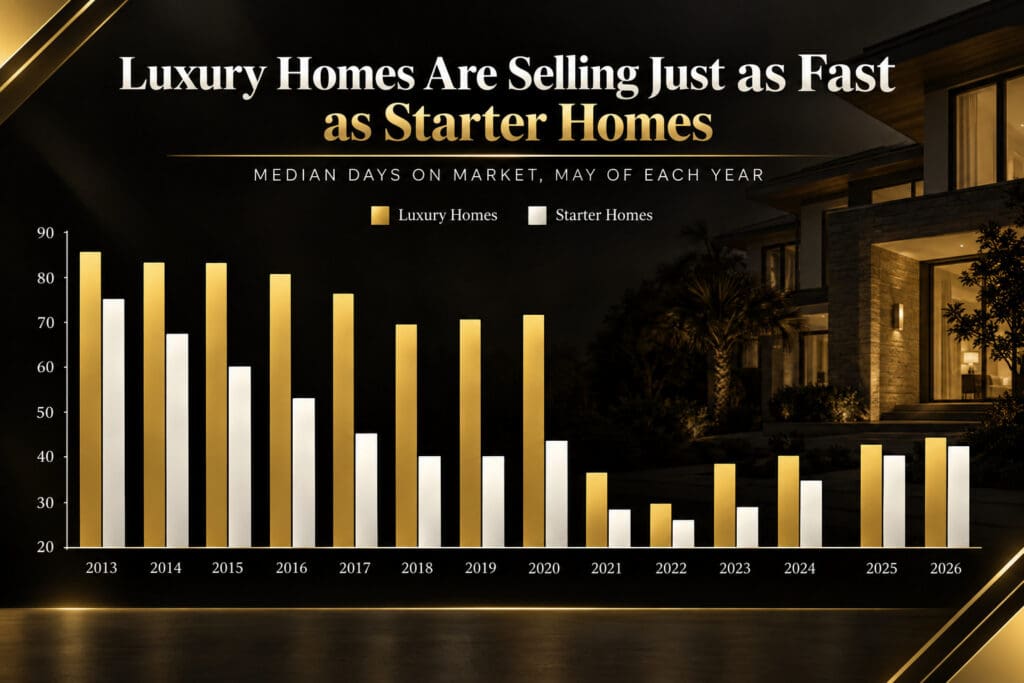
How fast a home sells is splitting by price point too. For years, luxury homes typically sat on the market longer than entry-level listings. Redfin data shows that gap has nearly closed.
Buyers with larger budgets are moving quickly when a well-priced home in their range hits the market. As Zillow puts it, the market is splitting in two, with luxury homes selling faster than a year ago as supply shrinks and bidding wars grow more common.
If you’re selling in that upper range, your home may move faster than expected, possibly with multiple offers on the table. That kind of competition changes how a listing should be priced and marketed from day one. No matter which side of the split your home is on, that’s information worth having before you list, so you can plan for the pace and pricing your specific market segment supports.
What This Means for Your Sale
If you’re selling an entry-level home, there’s no need to panic. Homes at your price point are still selling, just at a slower pace than a year ago. That slower pace makes accurate pricing and strong presentation more important than ever.
If you’re selling a move-up or luxury home, you’re in a strong position. Buyers at your price point are generally less sensitive to today’s rates, so they’re staying active, and well-priced listings are drawing real competition.
Either way, price point is the single biggest factor in how quickly your home sells and what it ultimately sells for. Understanding where your home fits in this split market is the first step toward a pricing strategy built around actual buyer behavior in your range.
Explore Homes in Tampa Bay


See Which Side of the Market Your Neighborhood Is On
Curious whether homes in your area are moving fast or sitting a little longer? Browse featured listings
•Family Communities in New Tampa
• First-Time Buyer Friendly Homes in Riverview
•New Construction in Wesley Chapel
• Valued Priced Homes in Odessa

Elena Esquen, MBA
Realtor® & Broker Associate
New Construction Specialist & Relocation Expert
Coldwell Banker Realty
📱 Phone: 813-822-4261
✉️ Email: Homes@EsquenTampaBay.com
🌐 Website: EsquenTampaBay.com
🏠 Resources: TampaHomesToday.com
🌴 Serving the Greater Tampa Bay Area
Frequently Asked Questions
1. Why are home sales rising in the higher price ranges but falling under $250,000?
Higher rates combined with several years of price appreciation have made entry-level homes harder to afford, especially for first-time buyers. Buyers above $750,000 are less rate-sensitive, often drawing on equity or investments, so demand there has stayed stronger.
2. Is now a bad time to sell an entry-level home in Tampa Bay?
No. Entry-level homes are still selling, just at a slower pace than last year. Success in this range comes down to accurate pricing and strong presentation from day one.
3. Are luxury homes really selling as fast as starter homes now?
According to Redfin, the gap in days on market between luxury and starter homes has nearly closed, a shift from years past when luxury homes typically sat much longer.
4. What’s driving faster sales at the top of the market?
Buyers in higher price ranges tend to have more financial flexibility, thanks to strong equity positions and a healthy stock market, making them less sensitive to today’s mortgage rates.
5. How does price point affect my pricing strategy as a seller?
Price point determines how much competition you’re up against and how buyers in that range behave. Entry-level sellers benefit from pricing accurately upfront, while move-up and luxury sellers may see faster sales and multiple offers with the right pricing.
6. Should I expect multiple offers on my home?
It depends on your price point. Homes above $750,000 are seeing more bidding activity, while entry-level homes generally see less competition right now, though well-priced, well-presented listings still attract buyers.
7. Where is this sales data coming from?
The sales and days-on-market figures referenced come from national sources, including the National Association of Realtors (NAR) and Redfin. They reflect national trends rather than Tampa Bay–specific statistics.
Disclaimer
Market data referenced in this article (NAR, Redfin, Zillow) reflects national trends and is not specific to Tampa Bay submarkets; local commentary reflects informed market perspective. Equal Housing Opportunity. Information is not intended as financial or legal advice; consult a licensed professional for guidance specific to your situation.